High-Protein Fall Harvest Salad
The other night, I was in the mood for a nutrient-dense salad. Inspired by a kale and walnut salad I saw, I put my own spin on it with pomegranate seeds, chicken for protein, sautéed shallots, and finished it off with Parmesan on top. The shallots, sautéed in grass-fed butter with red pepper flakes, add just the right bit of flavor. This salad is simple, flavorful, and exactly what I was craving. Enjoy!
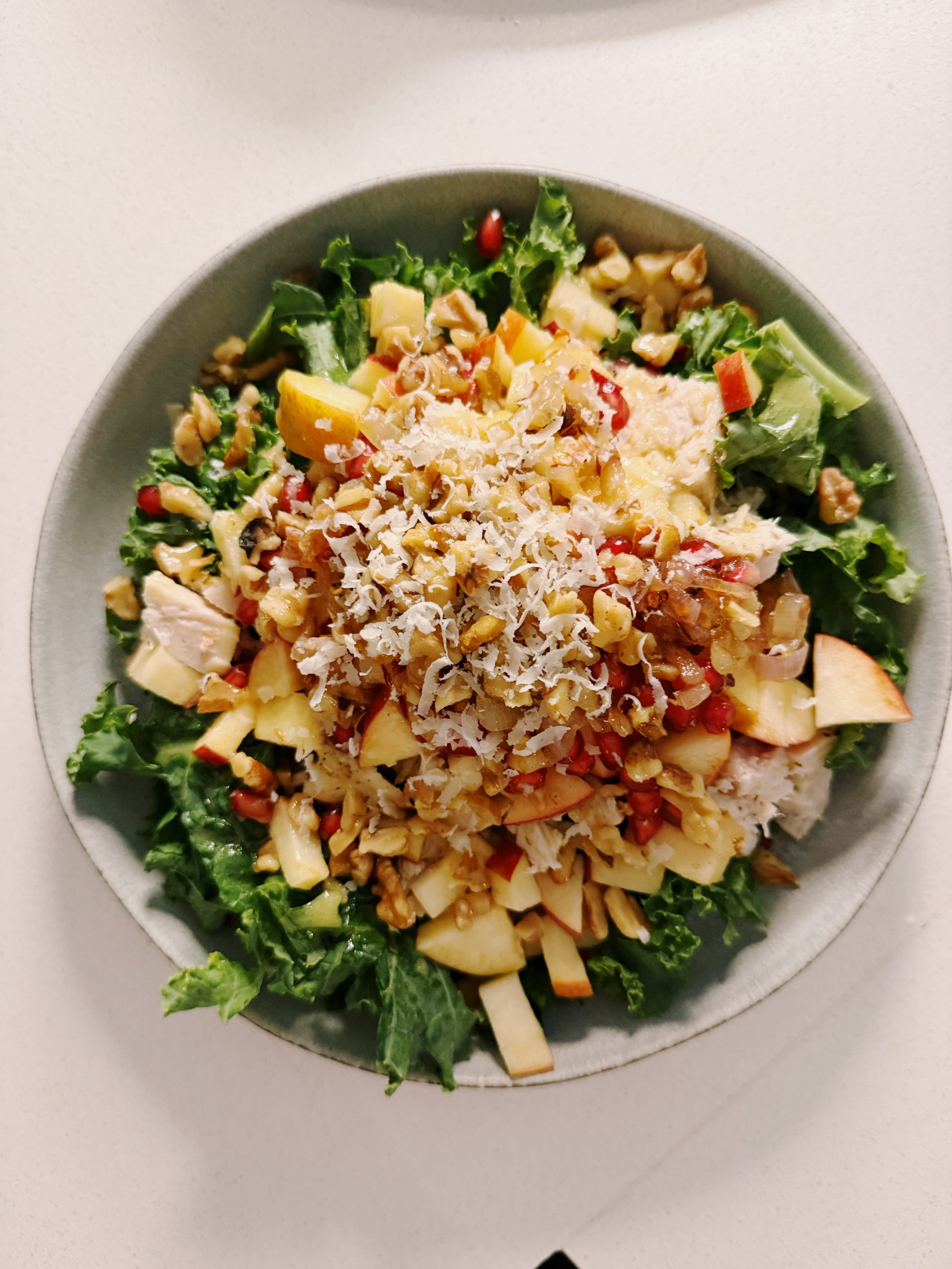
Ingredients
2 chicken breasts, pounded
Olive oil, for drizzling
Oregano
Sea salt
Black pepper
For the Salad:
1 bunch kale, stems removed and leaves chopped, massaged
1 Fuji apple, diced
1 shallot, thinly sliced
1 tbsp grass-fed butter (Kerrygold)
Red pepper flakes, to taste
Pomegranate arils
Walnuts, roughly chopped
Freshly grated Parmesan, for topping
For the Dressing:
3 tbsp olive oil
1 tbsp Dijon mustard
Juice of 1 lemon
1 tsp raw honey
Salt and pepper, to taste
—
Instructions
Cook the Chicken:
Preheat oven to 425°F (220°C).
Place pounded chicken breasts on a baking sheet, drizzle with olive oil, and season with sea salt, black pepper, and oregano.
Bake for 20–25 minutes, until cooked through.
Let rest for about 5 minutes, then shred the chicken.
Cook the Shallots:
Heat a skillet over medium heat. Add sliced shallots and red pepper flakes.
Sauté until the shallots are soft and golden, about 3–4 minutes. Remove from heat and set aside.
Prepare the Dressing:
In a small bowl, whisk together olive oil, Dijon mustard, lemon juice, honey, salt, and pepper until smooth and combined.
Assemble the Salad:
Place the massaged kale on a serving plate or in a large bowl.
Top with shredded chicken, diced apples, pomegranate arils, sautéed shallots, chopped walnuts, and a sprinkle of grated Parmesan.
Drizzle with dressing. Serve immediately.
Cheers to healthy living!
xx
Victoria and Eric
Tips From Our Kitchen:
Choosing Oils: One thing we’ve learned is that not all olive and avocado oils are created equal—some are cut with cheaper seed oils, even when they have a premium-looking label on the front. To make sure you’re getting the real deal, look for labels that say 100% olive or avocado oil, cold-pressed, single-origin (or just one location listed), and ideally a batch or lot number. These guidelines help ensure you’re getting a pure, high-quality oil that actually supports your clean eating efforts. Below are some of our favorite oils:
Grass-Fed Butter: Grass-fed butter might come with a higher price tag, but in our view, a cow’s diet really matters. When cows are fed grains—which their bodies aren’t designed to digest—they become nutrient-depleted and inflamed. That imbalance carries over into the meat and dairy products we eat, so essentially we’re consuming products from a sick animal, which isn’t ideal for our own health. Choosing grass-fed butter helps ensure you’re getting dairy that’s richer in nutrients. While 100% grass-fed is best, it can be hard to find in many grocery stores. That’s why we often aim for imported grass-fed butter, as EU regulations on animal welfare and food quality are stricter than in the US. Here are some grass-fed butters we’d recommend:
Massaging Kale: One thing I recently learned from watching one of the many cooking shows I enjoy is why you should massage your kale before eating it. And maybe most people know this, but I certainly didn’t! Massaging the leaves makes them more tender, less bitter, and easier to chew and digest—making the kale much more enjoyable to eat raw.
Raw Honey: One of our staples in the kitchen is local raw honey we pick up from the farmers market. Honestly, it’s by far the best honey we’ve ever had. Beyond taste, local raw honey has several health benefits, one being it helps with seasonal allergies by exposing you to small amounts of local pollen, potentially reducing sensitivity over time. Raw, organic honey also preserves enzymes, antioxidants, and other nutrients that are destroyed in processed honey, making it a natural, healthier sweetener to use when cooking or baking. Always opt for local raw honey when you can. If you can’t find local raw honey, here are some of our go-to favorites when our farmers market supplier runs out:
Organic Raw Unfiltered Pure Honey Good & Gather™
Nature Nate’s 100% Pure Raw Unfiltered Organic Honey
If you want to learn more about standard store-bought honey, check out Season 1, Episode 1 of Rotten on Netflix. Honestly, that entire documentary is eye-opening, but that episode specifically focuses on how honey is processed and how artificial sweeteners are often mixed into most store-bought honey due to high demand.
